
'I would recommend two parts to fiscal support. One, support the lower end of the society by direct intervention through ways such as direct benefit cash transfer. Second, give fiscal support to the stressed sectors in line with the Rs 3-lakh crore (Rs 3 trillion) emergency credit line guarantee norms'

The vacancies are learnt to be impacting the I-T department's day-to-day functioning.

India's economy is unlikely to see double-digit growth and may grow between 8 per cent and 9 per cent this fiscal year (2021-22, or FY22), against the estimated 11.5 per cent, according to leading economists and rating agencies. The downward revision of growth projections to as low as 10 per cent is mostly on account of stringency in restrictions by states, relatively slow vaccination pace, and the possibility of a third wave of the pandemic. However, they say the impact will not be as severe as the first wave, and expect the first quarter to see positive growth.

The two central premier investigative agencies - Central Bureau of Investigation and Enforcement Directorate - have asked their officials to focus more on digital evidence, e-forums and social media to crack down on offenders. These are a crucial part of prosecution amid the second wave of the pandemic. The Income Tax Department is going full throttle on data analytics to issue notices in time-bound cases. Further, sleuths have been given electronic devices including laptops with secure connections, which keep data encrypted and inaccessible.

The finance ministry has asked the tax department to impose hefty penalties on those hospitals found with unaccounted cash, and such entities could be booked under anti-money laundering laws and prosecuted, reports Shrimi Choudhary.

GST mop-up likely to fall in May, June after touching record levels in April and March.

E-way bill generation, which is related to paying Goods and Services Tax (GST) and a key high-frequency indicator of economic activity, may have fallen to a five-month low in April as more cities experience lockdowns due to a surge in Covid-19 cases. In April e-way bill generation may decline to 55-58 million, which is the lowest since at least November. On the higher side, it is a 17 per cent decline over March.

US proposal to raise the global corporate tax rate to 28% from 21% might face resistance from countries unwilling to give up their edge and compete with America on its terms.

The group has called for a retaliatory tariff action against India, if New Delhi does not roll back the 'unilateral and discriminatory' equalisation levy or Google Tax.

They say that a stimulus package may not be necessary because, unlike last year's total lockdown, public transport, including the railways and airlines, is running and the restrictions on movement are localised and, in some cases, are partial rather than total.


The Maharashtra police has booked Indiabulls group companies, including its flagship Indiabulls Housing Finance (IBHL), for allegedly siphoning off funds and for accounting irregularities committed by the promoters and directors of the company between 2014 and 2020. A first information report was registered by the Palghar police on April 13 under various sections of Indian Penal Code dealing with cheating, fraud and criminal conspiracy. The move comes after Palghar's judicial magistrate passed an order under Section 156 (3) of the Code of Criminal Procedure (power to direct police/agency to investigate the matter), following a complaint filed by Ashutosh Kamble, a shareholder of IBHL.

This will be an upfront payment for the vaccine doses that these two companies will supply to the government.

'Personal income tax collections have been high on account of impressive advance tax mop-up.'

Other decisions piled up include rationalisation of GST rate slabs, correction of inverted duty on certain items and inclusion of petroleum products.
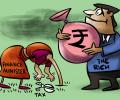
'Quite a few notices have been issued in both black money and benami transactions.'

The government is considering a provision to provide an exit window to holders of cryptocurrencies (cryptos), keeping in mind that banning them outright could deal a blow to investors sitting on them for years. According to sources in the government, the framework in the making may propose a grace period of three to six months for investors before prohibiting the possession, trading, mining, and issuing of cryptos. A group of secretaries chaired by the Cabinet secretary is learnt to have met in mid-March and discussed issues associated with cryptos, including the consequences of banning them and also on possible substitutes of blockchain technology - an advanced technology Bitcoin uses.

The idea is to do away with the need for the approval of the Core Group of Secretaries on Divestment for privatisation of companies, especially in non-strategic sectors.

Zero-coupon bonds don't give out interest but are issued at a deep discount to the face value, making it difficult to ascertain the net present value.
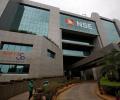
Sebi had, in February, dropped allegations of fraudulent and unfair trade practices against NSE's former heads Ravi Narain and Chitra Ramakrishna in the co-lo case.
 © 2025 Rediff.com - Investor Information - Advertise with us - Disclaimer - Privacy Policy - Sitemap - Feedback - About us - Terms of use - Grievances